

Guide · archive
Hard services in facilities management — archived version
The systems that keep a building standing, running and legal — and the obligations attached to each of them.
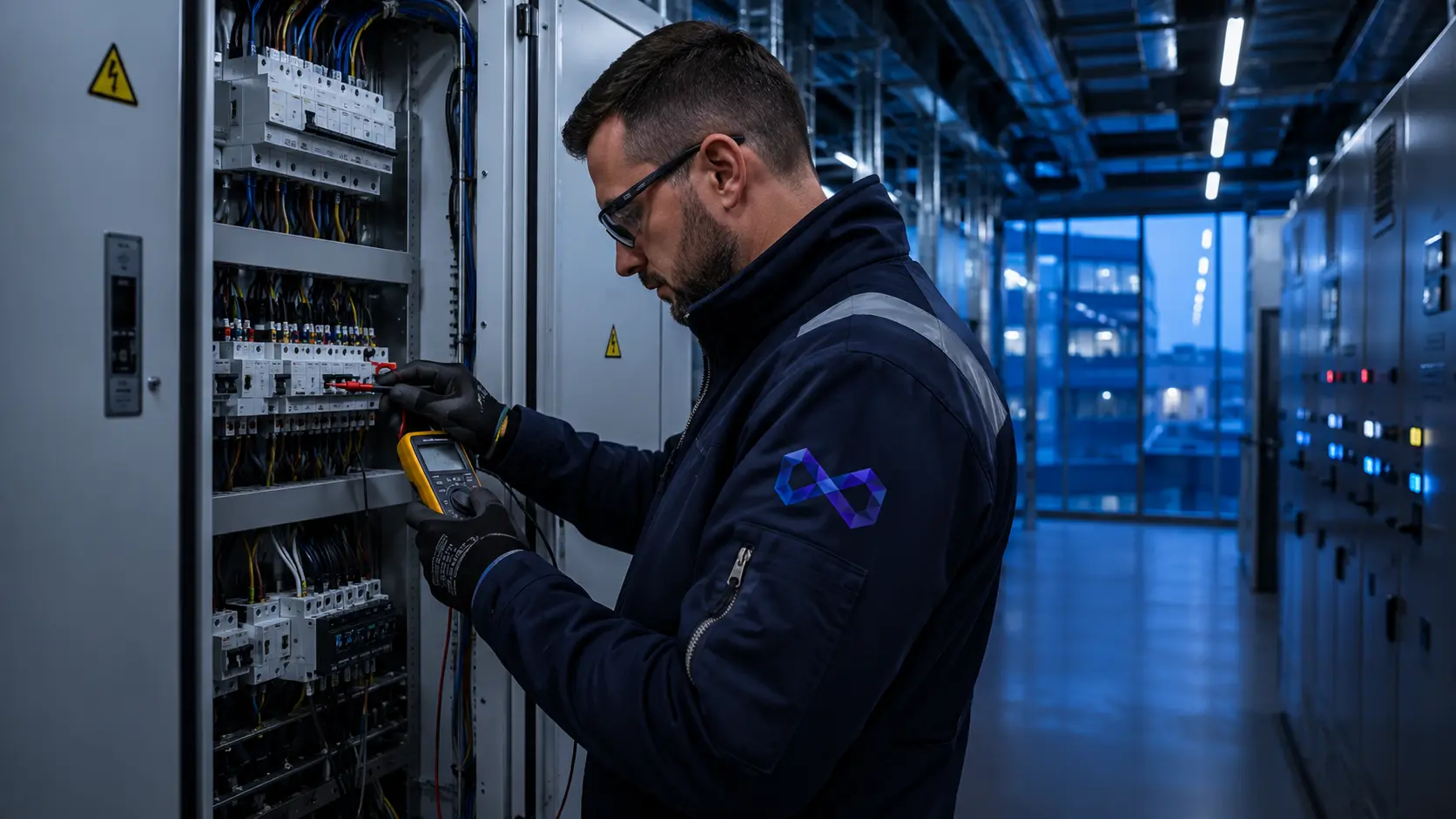
Hard services are the tangible, physical services that maintain a building's infrastructure. Unlike soft services, which address how a building is used, hard services address whether it works at all — and most of them carry statutory obligations that do not move when a budget does. This URL is retained from the previous site; the fuller version lives at /post/what-are-hard-services-in-facilities-management.
Building fabric and structure
The upkeep of the structural elements: roofing, cladding, external envelope, doors and windows. Fabric maintenance is the most commonly deferred category in facilities management and the most expensive to defer, because water ingress does not stay a fabric problem — it becomes an electrical problem, then a mould problem, then a business continuity problem.
Electrical services
Power distribution, lighting, emergency systems and small power. The governing duty is regulation 4(2) of the Electricity at Work Regulations 1989: systems must be maintained, so far as is reasonably practicable, to prevent danger. Fixed wire inspection and testing, reported as an EICR, is how that duty is normally evidenced; the interval comes from IET guidance and risk, not from statute.
Plumbing, drainage and water systems
Water supply, drainage, and — the part most often underestimated — water hygiene. The Approved Code of Practice L8 requires a written scheme of control for Legionella risk. It sets no monitoring interval; the scheme does. A site running to a generic monthly regime with no written scheme behind it has bought testing, not compliance.
Heating, ventilation and air conditioning
HVAC covers comfort, air quality and, increasingly, the largest single component of an estate's energy bill. Systems containing fluorinated gases carry leak-checking obligations that are genuinely set in law and calculated per system from the CO2 equivalent of the refrigerant charge — one of the few intervals in facilities management that is a legal maximum rather than an industry habit.
Fire safety systems
Detection, alarms, emergency lighting, extinguishers and suppression. Under the Regulatory Reform (Fire Safety) Order 2005 the Responsible Person must maintain the relevant fire precautions in efficient working order. The familiar intervals — weekly alarm test, monthly emergency lighting function test, annual duration test — come from British Standards, principally BS 5839 and BS 5266, not from the Order itself.
Lifts and lifting equipment
Passenger lifts, hoists, gantries and anything else that lifts loads or people. Here the intervals genuinely are statutory: under LOLER 1998, equipment used to lift people requires thorough examination at least every six months, and other lifting equipment at least every twelve.
Where hard services management goes wrong
- No asset register, so nobody can say what should have been maintained
- Statutory testing and planned maintenance treated as one list, when they are legally different obligations
- Failed tests logged and never closed out — the certificate exists, the remedial does not
- Intervals inherited from a previous contract with nobody knowing why they were set
- Landlord and tenant plant maintained by different suppliers with no shared record
- Recurring faults repaired repeatedly instead of being escalated to a replacement decision
What good looks like
- A survey before a schedule, and a schedule referenced to SFG20
- One compliance calendar covering every statutory regime on the site
- Certificates filed against the asset, not against the invoice
- Remedial actions tracked to closure with an owner and a date
- Condition and remaining life recorded, so capital planning has an evidence base
Referenced in this article
More reading
Sectors
Facilities management across sectors: what changes, and what does not
Similarities, differences, and why the same scope of work needs a different plan in each.
Opinion
Why regular maintenance and inspection actually pays
Planned maintenance is the easiest line to cut and the most expensive one to have cut. Here is where the money actually goes.
Guide
Hard services in facilities management: a complete guide
The systems that keep a building standing, running and legal — and the obligations attached to each of them.