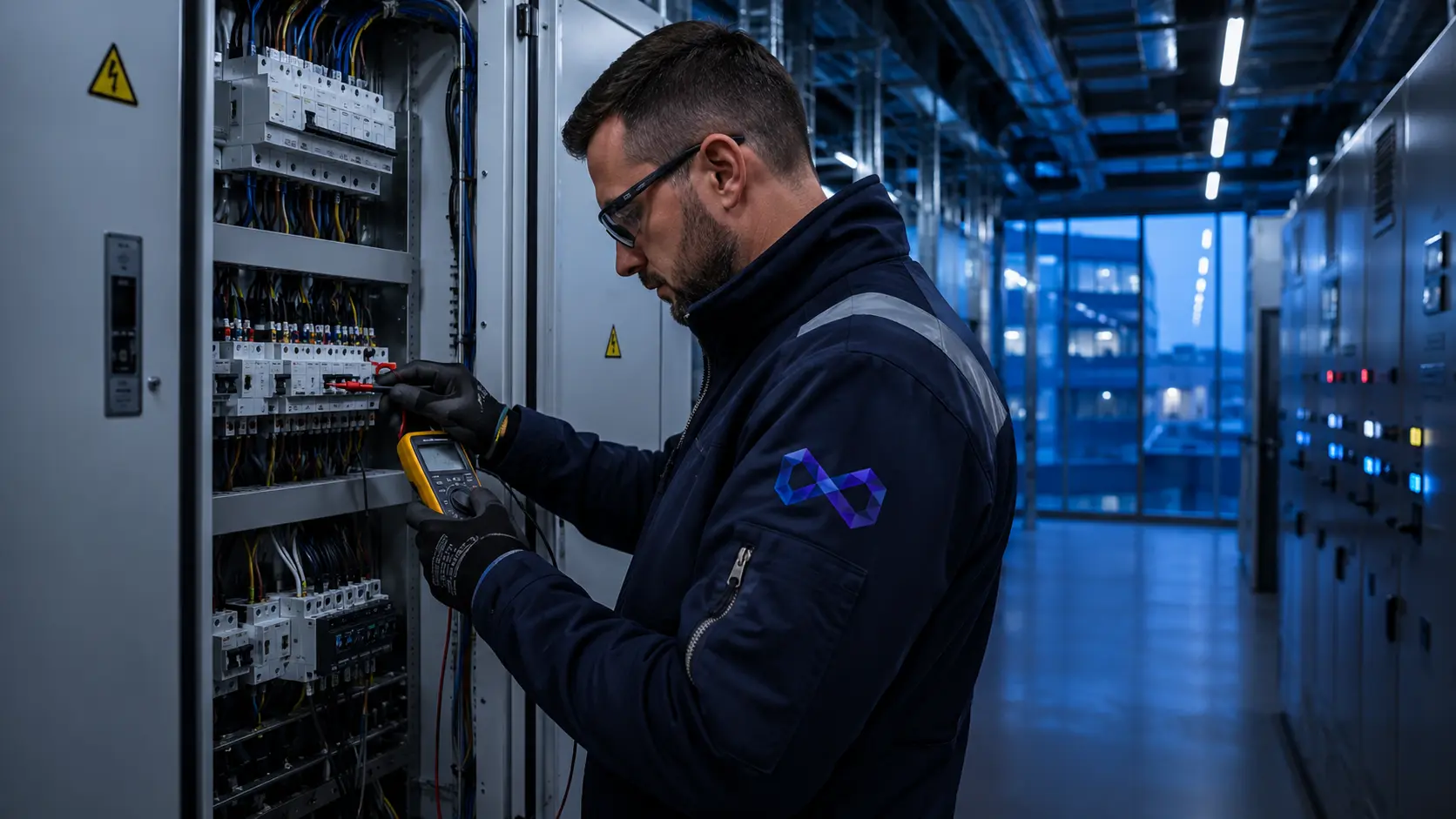

AI Energy Optimisation in Commercial Buildings
Leveraging algorithmic building controls, weather regression, and occupancy tracking to drive down kWh consumption and carbon emissions across commercial estates.
- ResponseOut-of-hours cover
- ComplianceStatutory testing & records
- EstatesCommercial & industrial
- ScopeHard & soft services
Key Takeaways: AI Energy Optimisation in Commercial Buildings
Dynamic BMS Multi-Variable Demand Analysis
Continuous tuning balancing ambient weather forecasts, floor occupancy, and chilled water valve demand.
Eliminating Simultaneous Heating and Cooling
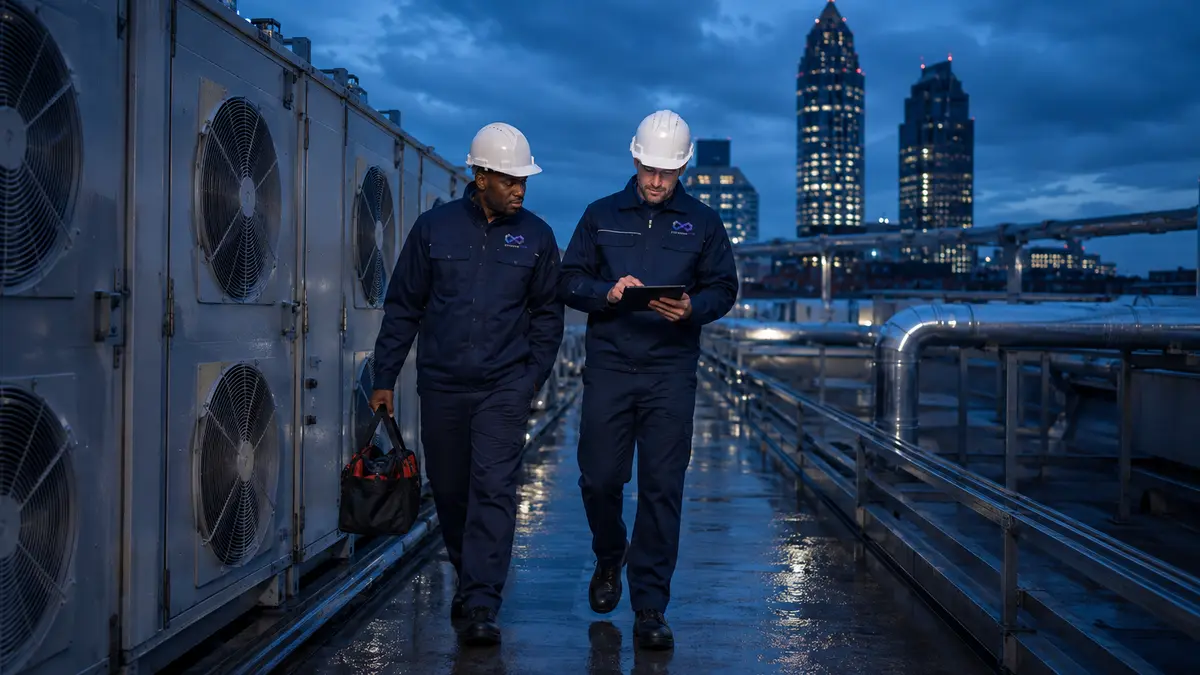
One of the largest sources of energy waste in commercial buildings occurs when BMS controllers inadvertently call for perimeter heating while central AHUs are delivering maximum chilled cooling. AI pattern recognition detects and resolves valve conflicts automatically.
How Algorithmic Energy Tuning Works in Practice
Commercial HVAC systems account for 40-60% of commercial building energy consumption. Conventional BMS systems run on rigid static time schedules and fixed setpoints. AI energy algorithms continuously evaluate external ambient temperatures, solar irradiance forecasts, internal thermal decay rates, and badge-swipe occupancy numbers to dynamically adjust chiller flow rates, boiler flow temperatures, and AHU fan speeds.
Realistic Energy Reductions Without Unrealistic Promises
Energy savings from AI supervisory software are highly dependent on baseline plant efficiency and controls maturity. In buildings with uncalibrated pneumatic actuators or failing dampers, software optimisation cannot overcome mechanical faults. A thorough physical M&E and controls audit must always precede algorithmic tuning.
Related Engineering & Technology Guides
Continue exploring EntireFM's technical research and facilities management operational frameworks.
AI Predictive Maintenance Guide
Condition-based monitoring, IoT vibration sensors, BMS telemetry, and PPM optimization.
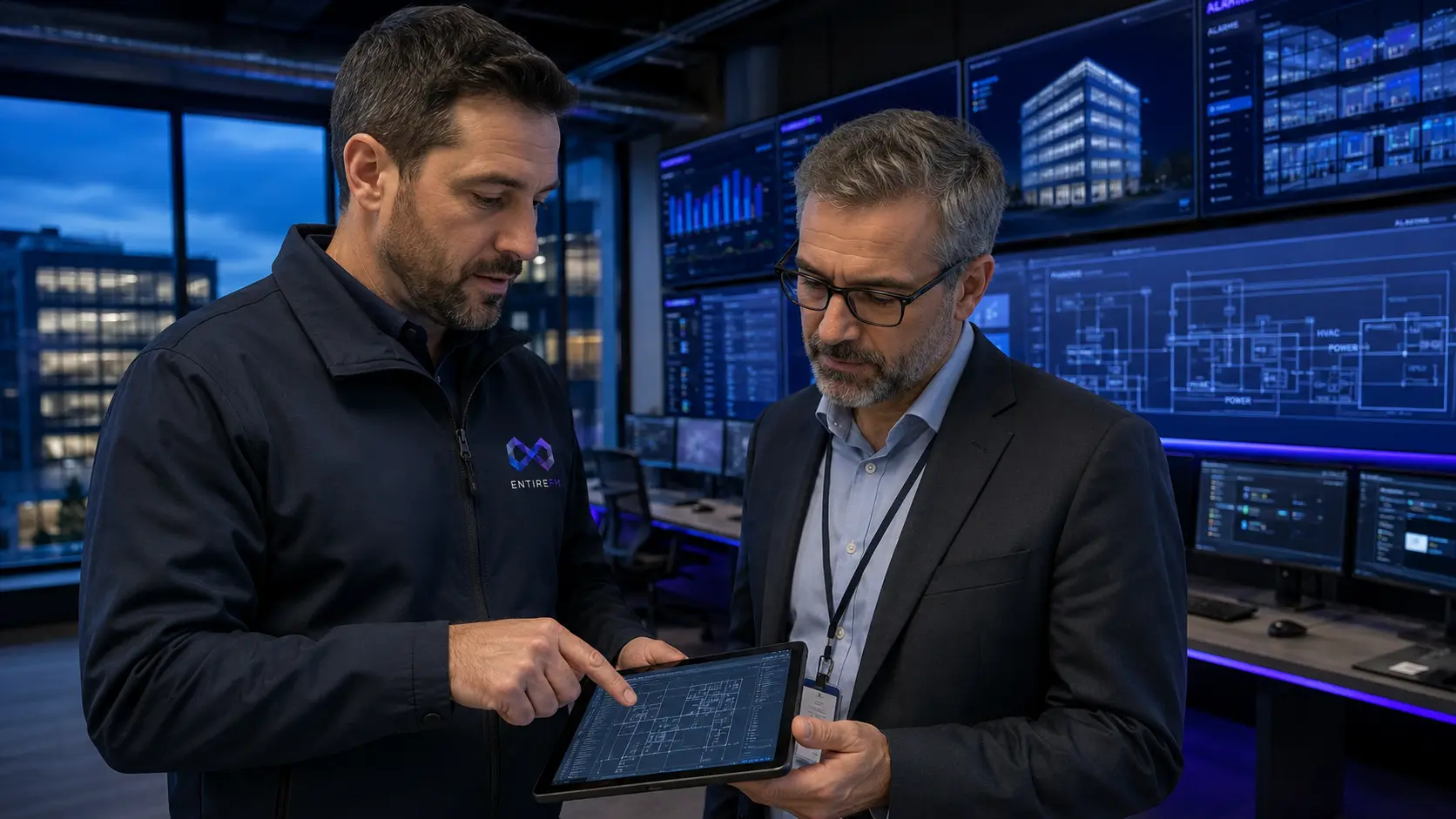
AI and Next-Gen CAFM Software
Vector asset search, automated scheduling, predictive SLA risk scoring, and EntireCAFM technology.
AI in the FM Helpdesk & Work Orders
Natural language ticket triage, spatial asset mapping, automated dispatch and human safety safeguards.
Direct Engineering Accountability. No Bureaucratic Delays.
Whether you require a comprehensive Hard & Soft FM contract, single-site mechanical & electrical maintenance, or an urgent specialist survey, EntireFM deploys certified engineers and dedicated account managers nationwide.
Comprehensive Statutory Compliance Management
Structured PPM scheduling, periodic engineering testing, statutory record keeping, and digital audit logs.
Central Operations Helpdesk
Direct helpdesk triage, reactive engineer dispatch, and clear SLA performance tracking.
Discuss Technical Facilities Management for Your Property Portfolio
Speak with our engineering and operations team about deploying structured planned maintenance, EntireCAFM software, and statutory compliance management across your buildings.
Facilities-management intelligence without the noise.
A concise weekly editorial briefing on maintenance, statutory compliance, engineering, and building technology. No marketing fluff or promotional spam.