
Condenser Airflow Starvation on Enclosed Rooftop Plant Decks
Why clean coil faces still trip high-pressure switches when acoustic louvres or parapets are retrofitted around rooftop VRF condensers.
EntireFM Technical Directorate
Building Services Engineering & Operations
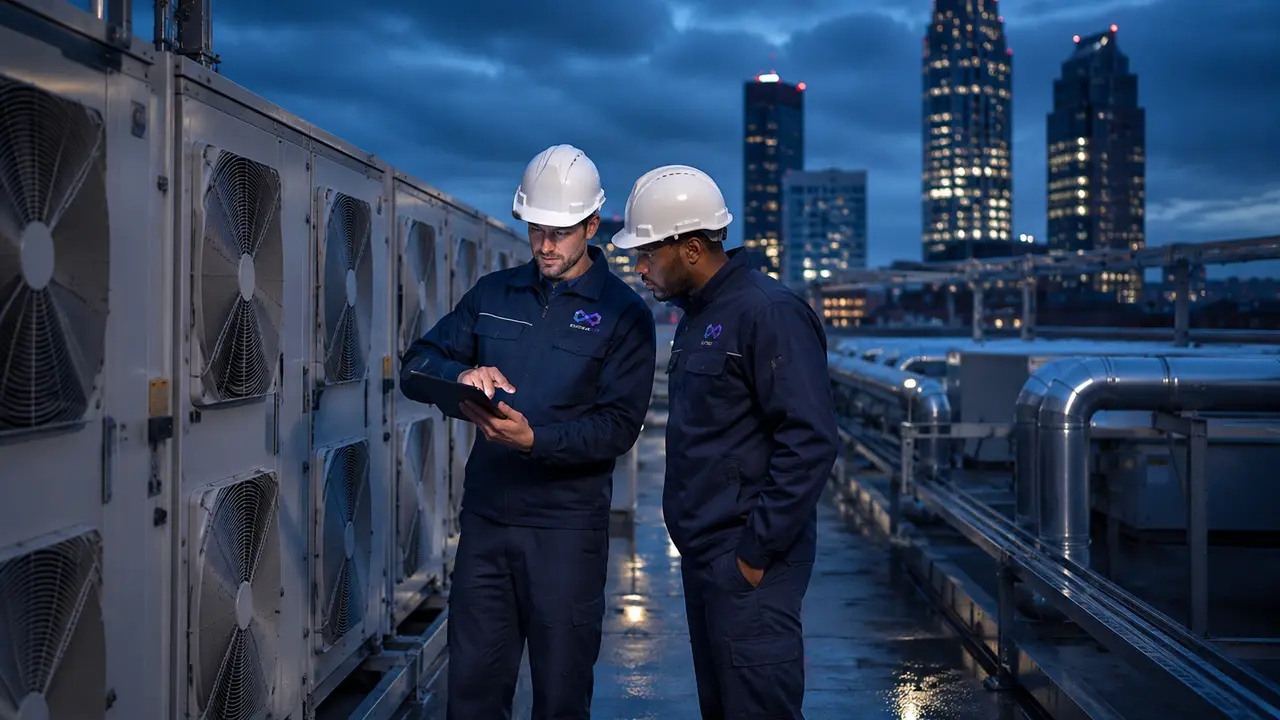
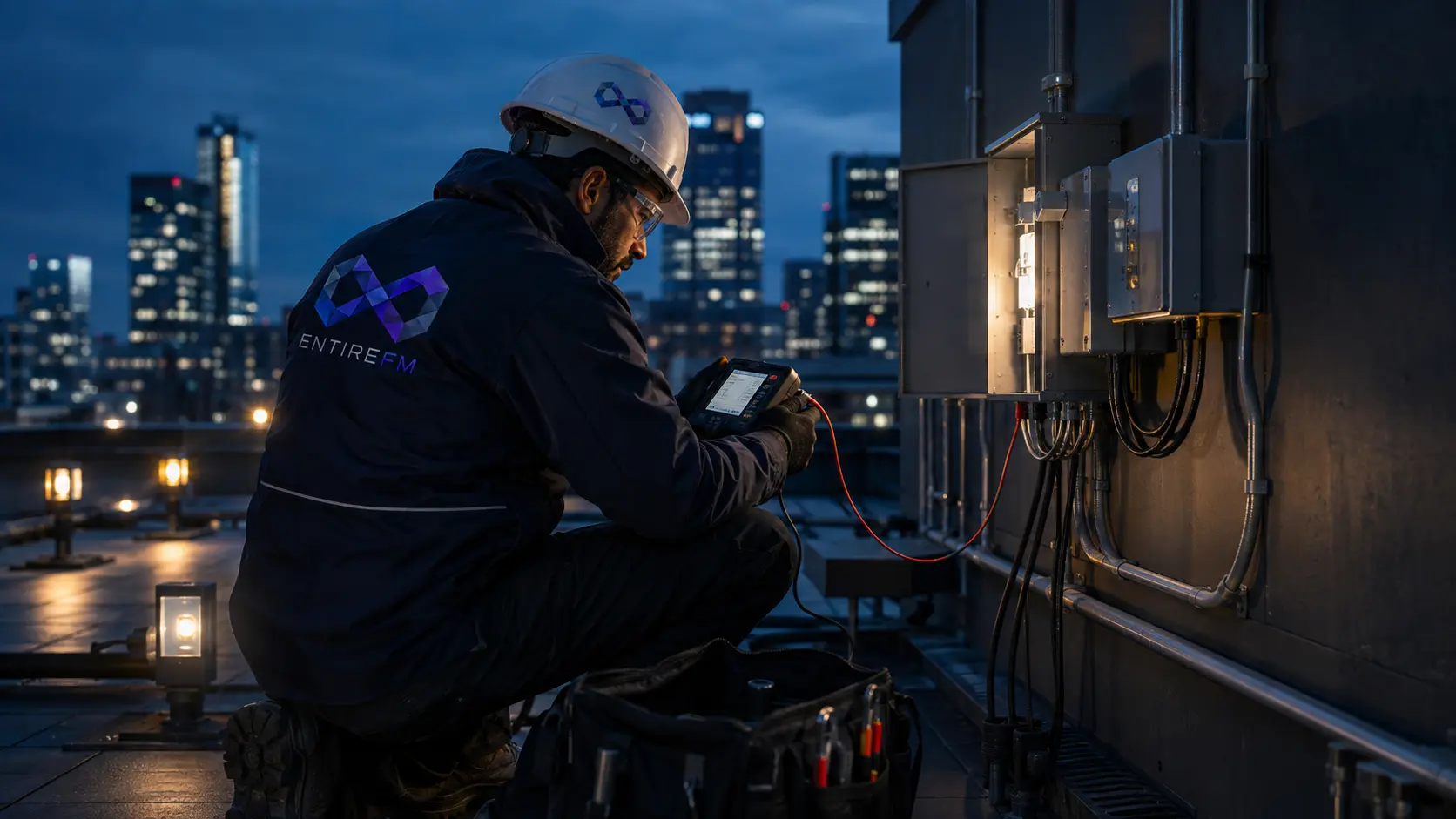
Rooftop condenser bank with acoustic enclosure and discharge baffles
RULE OF THUMB: Minimum discharge clearance on upward-blowing packaged condensers is 2.5× the fan diameter. Where louvres are mandatory, install 45° discharge hood extensions to push thermal exhaust clear of the acoustic boundary envelope.
Symptom Diagnosed: Recurring E3/HP high-pressure lockout faults during peak summer ambient days despite clean coils.
During recent site diagnostics across commercial office rooftops in Birmingham and London, our senior mechanical engineering team was called to investigate persistent high-pressure trips on modern VRF plant. In all cases, routine PPM records showed clean coils, correct oil levels, and verified F-Gas charge.
The Physics of Thermal Re-Ingestion
When acoustic screening walls are erected without computational airflow modelling, the hot discharge plume slows down upon hitting the louvre slats. Negative pressure created by the condenser intake fans pulls this superheated air back downward across the condensing coils, severely reducing heat rejection capacity.
DIAGNOSTIC TEST: Place calibrated temperature dataloggers directly on the coil intake grilles and compare readings against a free-air ambient sensor 5 metres away. An intake delta greater than +4°C indicates severe recirculation requiring ducting cowls.
Related Lobby Intelligence
Why Commercial AHU Belts Fail Prematurely in Variable-Speed Systems
Diagnosing drive belt shredding, pulley misalignment, and tension resonance on inverter-driven Air Handling Units.
From The Field: Diagnosing Rooftop Condenser Vibration Resonance
An operational diagnostic case study: how metal-to-metal spring isolator bottoming was telegraphing 50Hz low-frequency acoustic noise into executive suites below.
Building Decarbonisation & Hard FM Asset Electrification Summit 2026
Curated technical briefing on replacing commercial gas calorifiers with commercial heat pumps without electrical capacity bottlenecks.