

Predictive Maintenance vs PPM: Does AI Replace Planned Maintenance?
Why the debate between planned preventative maintenance and AI predictive monitoring is based on a false dichotomy, and how top estates combine both.
- ResponseOut-of-hours cover
- ComplianceStatutory testing & records
- EstatesCommercial & industrial
- ScopeHard & soft services
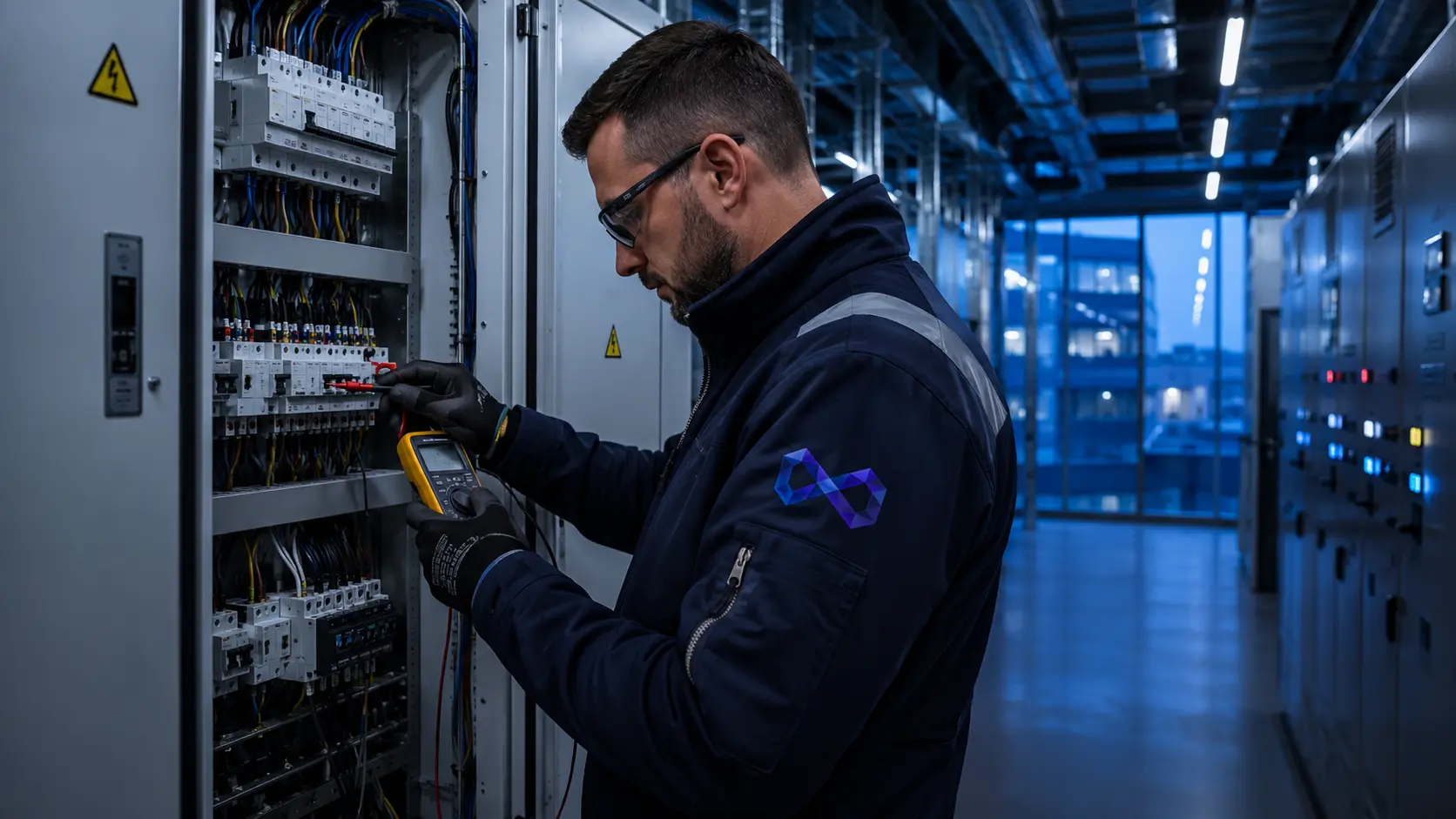
A common claim in facilities technology marketing is that AI predictive maintenance (PdM) makes Planned Preventative Maintenance (PPM) obsolete. In commercial real estate, this claim collapses upon contact with UK statutory legislation and mechanical reality. Predictive maintenance does not replace PPM; it refines intervention timing on high-criticality assets while standard PPM protects life safety and building fabric.
The fundamental difference in methodology
Preventative maintenance operates on time-based or run-hour intervals, such as servicing an air handling unit every quarter or testing emergency lights every month regardless of perceived condition. Predictive maintenance continuously measures operational variables (vibration spectrums, thermal delta-T, electrical harmonic distortion) to identify the specific onset of physical degradation.
The statutory barrier to eliminating PPM
Under UK safety law, building duty holders cannot substitute sensor analytics for mandatory physical inspections. The Pressure Systems Safety Regulations 2000, Gas Safety (Installation and Use) Regulations 1998, and Lifting Operations and Lifting Equipment Regulations 1998 (LOLER) explicitly mandate physical examinations by certified competent persons. An AI algorithm cannot legally sign off a statutory compliance record.
- LOLER 1998 mandates thorough examination of passenger lifts every 6 months
- BS 5266-1 requires monthly functional testing and annual 3-hour discharge testing for emergency lighting
- ACOP L8 requires monthly temperature monitoring at sentinel water outlets
- BS 7671 recommends periodic electrical inspection (EICR) every 1 to 5 years depending on premises type
The hybrid maintenance model
The most effective commercial strategy uses PPM as the compliance and fabric baseline, while deploying IoT sensors and predictive algorithms selectively on high-capital plant (such as centrifugal chillers, main boiler burners, and primary water pumps), where unexpected failure carries severe financial or operational consequences.
Read EntireFM Without Checking EntireFM
A concise weekly briefing covering the facilities management developments worth knowing about.
Further Reading & Analysis
All ArticlesAI in Facilities Management in 2026: What Is Actually Useful?
Cutting through software vendor hype to assess where machine learning, language models and automation are delivering real operational value across UK commercial property.
Can AI Run an FM Helpdesk?
Examining what automated intake and machine triage can achieve across high-volume service desks, and why human coordinators remain vital for estate safety.
AI Agents in FM: What Facilities Managers Need to Know
Moving beyond passive chatbots to understand how goal-directed software agents execute multi-step facilities tasks within defined engineering guardrails.
Facilities-management intelligence without the noise.
A concise weekly editorial briefing on maintenance, statutory compliance, engineering, and building technology. No marketing fluff or promotional spam.
Direct Engineering Accountability. No Bureaucratic Delays.
Whether you require a comprehensive Hard & Soft FM contract, single-site mechanical & electrical maintenance, or an urgent specialist survey, EntireFM deploys certified engineers and dedicated account managers nationwide.
Comprehensive Statutory Compliance Management
Structured PPM scheduling, periodic engineering testing, statutory record keeping, and digital audit logs.
Central Operations Helpdesk
Direct helpdesk triage, reactive engineer dispatch, and clear SLA performance tracking.
Request a Facilities Management Review
A detailed survey of what your commercial estate is obliged to deliver, what is evidenced, and where the risk gaps lie.