


Skip to content
MECHANICAL & PLANTROOM TOOLKIT

Plantroom Pre-Work Isolation & Safety ChecklistSafe system of work verification for commercial plantroom maintenance.

Commercial plantrooms contain rotating machinery, pressurised hot water, high-voltage switchgear, and hazardous gases. This pre-work safety checklist enforces rigorous Safe Isolation, Lock-Out Tag-Out (LOTO), pressure release, and emergency egress verification.

5 min guide + copyable checklistUpdated September 2026 UK Commercial FM Standard
Executive Summary

Ensuring hydraulic depressurisation, thermal cool-down, electrical dead-testing, and unobstructed egress prevents catastrophic site incidents during plantroom overhauls.

Authoritative UK facilities management guidance. Non-legal operational standard.
CHECKLIST FRAMEWORK

Interactive Plantroom Pre-Work Safety Checklist

Copy this checklist into your safe system of work packs or download the text format.

OFFICIAL TEMPLATE STRUCTURE

Plantroom Pre-Work Safety Checklist

Step-by-step mechanical isolation, LOTO, and emergency safety checklist for commercial building services plantrooms.

SECTION 01

Access Authorisation & Permit Verification

Why required: Ensure all required permits and building security clearances are authorised prior to crossing the plantroom threshold.

General Permit to Work (PTW)
PTW signed by EntireFM facilities manager and contractor lead engineer.
Specialist Permits
Hot Works, Confined Space, or Working at Height permits active and signed where required.
Plantroom Key & Log-In
Key signed out from reception/security desk with operative time-in recorded.
Competency Card Check
CSCS/Skillcard verified for all mechanical engineers attending.
SECTION 02

Environmental Safety & Emergency Egress

Why required: Verify escape routes, emergency stop devices, forced ventilation, and gas detection systems.

Escape Route Clearance
Primary and secondary escape routes 100% unobstructed, illuminated, and doors unlocked from inside.
Emergency Stop Locations
Gas slam-shut valves and electrical emergency stop buttons identified.
Forced Ventilation & Gas Sensors
Verify mechanical extract ventilation running and gas alarm panel healthy (no active alarms).
Task Lighting Level
Adequate temporary or fixed illumination (minimum 200 lux across pump and valve work zones).
SECTION 03

Energy Isolation & Lock-Out Tag-Out (LOTO)

Why required: Isolate mechanical, electrical, thermal, and hydraulic energy sources before opening system boundaries.

Electrical Lock-Out
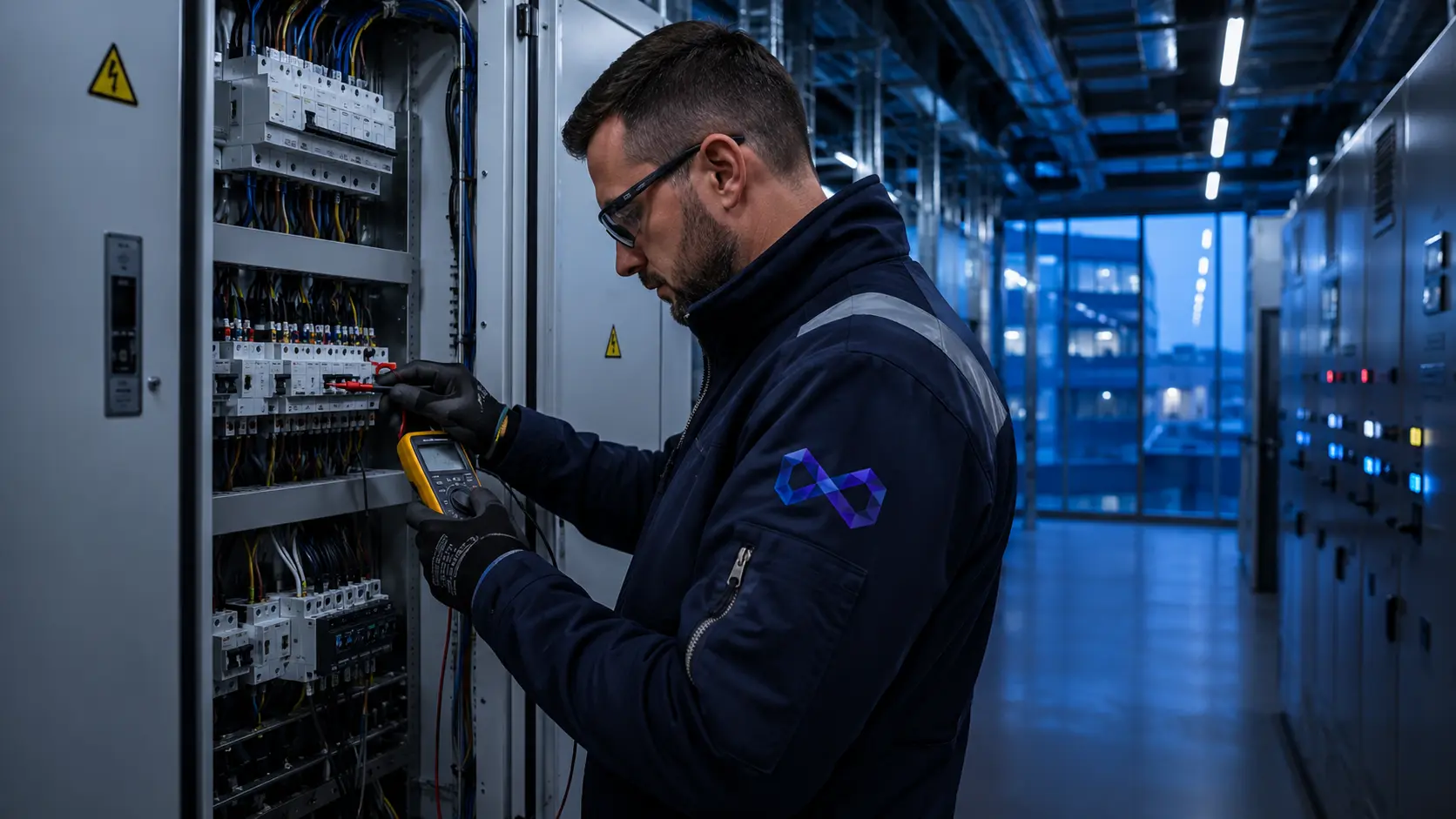
Isolate local rotary switch/MCB with personal padlock, warning tag, and prove dead with calibrated meter.
Hydraulic / Valve Isolation
Flow and return valves closed, locked with chain/clamp, and tagged with engineer details.
Pressure Depressurisation
Drain down isolated section slowly; verify pressure gauge reads 0.0 bar before loosening bolts.
Thermal Cool-Down
Verify water/steam circuit temperature has cooled below 40°C to prevent scalding injuries.
SECTION 04

Spill Containment, Lifting & Housekeeping

Why required: Prevent building flood damage, protect floor finishes, and verify heavy lifting equipment.

Bunded Drip Trays
High-capacity drip trays positioned under all drain cocks and pump flanges.
LOLER Lifting Certification
A-frame gantry, chain hoist, and webbing slings inspected and within 6-month LOLER inspection.
Fire Extinguisher Proximity
Dry powder / CO2 extinguisher positioned within 5 metres of work area.
Waste & Component Removal
Scrap pump motors and glycol waste removed via licensed waste management carrier.
Operational Notice: Using a template provides a structured starting point but does not automatically ensure statutory compliance. All risk assessments, RAMS and method statements must be adapted to actual site conditions, specific equipment, operative competencies and client constraints.
QUESTIONS & ANSWERS

Plantroom Safety & Isolation Questions

Clear operational answers on contractor documentation, compliance, and FM requirements.

Why must water systems cool below 40°C before opening connections?
High-temperature Low Temperature Hot Water (LTHW) and Medium Temperature Hot Water (MTHW) systems operate at 70°C–120°C under pressure. Opening uncooled pipework risks catastrophic scalding and flash steam generation.
What is required for a commercial Hot Works permit in a plantroom?
A Hot Works permit requires removal of combustibles within a 10-metre radius, active fire watch during works, deployment of appropriate fire extinguishers, and a minimum 60-minute continuous post-work fire watch after all heat sources are extinguished.
How does EntireFM verify plantroom permits?
Permits to Work and associated pre-work isolation checklists are submitted digitally through the Contractor Portal prior to site arrival for FM authoriser sign-off.